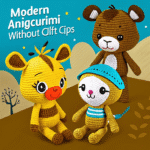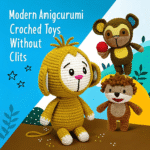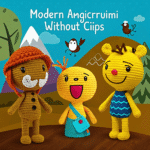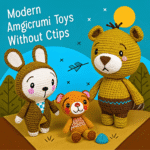
Амигуруми для начинающих
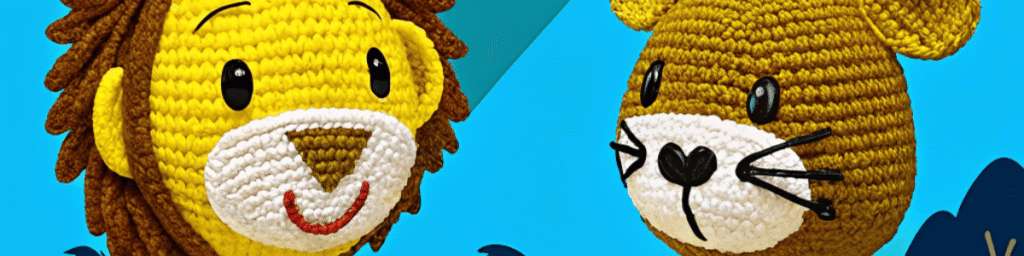
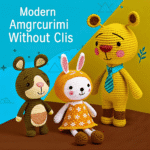
The world of amigurumi is a magical realm of tiny knitted creatures that capture hearts with their charm. If you are just starting out on this exciting hobby, you may be wondering where to begin. Which [amigurumi toys] are easiest for beginners to knit? Don’t worry, these recommendations will help you take your first steps in this creative process!
The main rule for beginners is to choose simple shapes and a minimum number of details. The fewer complex elements and transitions there are, the easier it will be to master the basic techniques and enjoy the process.
Ideal starter projects
Simple balls and cylinders
Why it’s easy: The basis of most amigurumi is circular knitting. A ball or cylinder is essentially simple single crochet with gradual increases and decreases. This is a great way to hone your even crocheting skills and understand how volume is formed.
What you can knit:
- [Fruits and vegetables]: Apples, oranges, tomatoes, peas—these are all great examples of simple shapes. Add a small stem or leaf, and you have a cute decoration or even an educational toy.
- [Candy and lollipops]: Bright colors and simple shapes make them very attractive.
- [Balls]: A classic for practice. You can make them in different sizes and colors.
- [Simple animals]: For example, the head of a bear or a rabbit, which can then be sewn onto a cylindrical body.
Simple animals with a minimum of details
Why it’s easy: Once you’ve mastered [circular knitting], you can move on to more recognizable shapes. Choose animals that don’t have complicated ears, paws, or tails.
What you can knit:
- [Bear cub]: The classic version. Usually consists of a head, torso, two ears, and two paws. All these parts are knitted separately and then sewn together.
- [Bunny]: Similar to a bear cub, but with longer ears. The ears can be knitted as simple elongated cylinders.
- [Penguin]: A very simple shape consisting of a body, head, and two wings. The wings can be knitted flat or slightly voluminous.
- [Baby elephant]: Often knitted from several simple parts: body, head, ears, and trunk. The trunk can be knitted as an elongated cylinder.
- [Owl]: Usually consists of a body, head, and two round eyes. The wings can be simple semicircles.
Simple accessories and decorative elements
Why it’s easy: If you’re not ready to make a whole toy yet, start with small elements that can be used for decoration or as standalone items.
What you can knit:
- [Flowers]: Simple flowers with several petals are a great way to practice knitting in a spiral and creating three-dimensional shapes.
- [Stars]: Another simple option for practice.
- [Hearts]: You can knit flat or three-dimensional hearts.
- [Buttons]: Small round elements that can be part of a larger toy or used as a standalone decoration.
Tips for beginners
- Choose [medium-weight yarn]: Yarn that is too thin can be difficult for beginners to work with, and yarn that is too thick can make the toy bulky. Medium-weight yarn (such as acrylic or cotton) holds its shape well and is easy to work with.
- Use the [right hook]: The size of the hook should match the thickness of the yarn. The recommended hook size is usually indicated on the yarn label.
- Count your stitches: This is the most important tip! In [amigurumi], it is very important to follow the pattern exactly and count each stitch to avoid distortion of the shape. Use a stitch marker to mark the beginning of the row.
- Don’t be afraid to unravel: If you make a mistake, don’t hesitate to unravel a few rows and re-tie. It’s part of the learning process. Important!!! For unraveling, it is better to use smooth yarn, not plush yarn!!! Get ready for a “dress rehearsal” and repeat it as many times as it takes for you to knit correctly. Once you have mastered a knitting technique or toy detail that is new to you, you can start knitting for real.
- Stuff the toy evenly: Use filler (hollofiber, synthetic down) and stuff the toy tightly but evenly so that it does not lose its shape.
- Look for [simple patterns]: Start with patterns for beginners, which are often accompanied by detailed descriptions and photos. There are many online resources and communities where you can find such patterns.
- Watch : Visual learning can be very helpful. There are many channels on YouTube dedicated to amigurumi knitting, where each step is shown in detail.
- Don’t give up! Your first toys may not be perfect, but with each new attempt, you will become better and more confident. The main thing is to enjoy the creative process!
Start with simple shapes, gradually increase the complexity of the tasks, and very soon you will be able to create entire collections of adorable knitted friends! Good luck on your [amigurumi journey]!
Popular Products
-
 Товар99,00 ₴
 -
 Mug BHeart5,00 ₴
 -
 Phone Case Canvas9,95 ₴