Как правильно набивать игрушки: секреты и лайфхаки
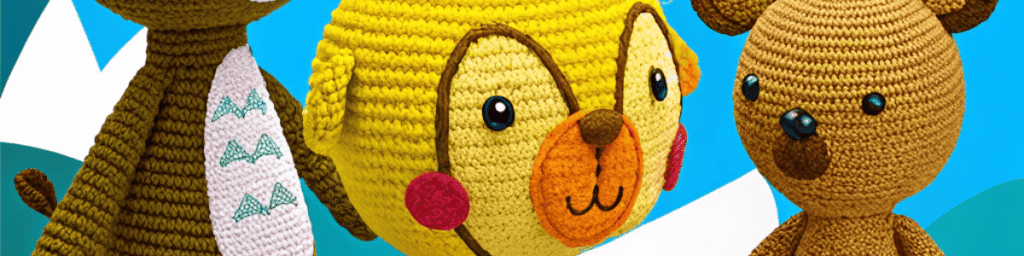
So, let’s stuff the pine cones! And the pine cones too, if we decide to knit a pine cone! Stuffing (filling) the toy is perhaps one of the most important stages in creating amigurumi. The appearance, stability and overall impression of the finished product depend on how carefully and correctly you stuff the toy. Incorrect stuffing can lead to deformation, the appearance of unsightly bumps or, conversely, to a too soft and shapeless toy.
Here are the secrets and life hacks that will help you stuff amigurumi toys at a professional level.
Choosing the right filler: the basics
Before you start stuffing, it is important to decide on the filler. The final result depends on its quality and properties.
- [Hollofiber (synthetic fluff)]: The most popular and affordable option. It is lightweight, hypoallergenic, holds its shape well and is easy to wash. Hollow fiber comes in different densities, which allows you to adjust the rigidity of the toy.
- [Sintepon]: Looser than holofiber, and can wrinkle over time. Good for stuffing small parts or adding softness.
- [Pillow filler (down-feather)]: Natural, but can cause allergies and requires more careful care. Not recommended for children’s toys.
- [Wool]: Natural, environmentally friendly material that gives the toy special softness and warmth. However, wool can be expensive and requires careful washing.
- [Granulate (plastic or glass balls)]: Used to weigh down the toy, give it stability, or to create a “live” effect in the paws or belly. It is important to use granulate in special bags so that it does not leak through the loops.
Life hack: To achieve the best result, a combination of fillers is often used. For example, holofiber for the main mass and some granulate in the paws for stability.
Tools for stuffing: the master’s assistants
For neat and even stuffing, you will need special tools:
- Stuffing stick: This can be a special stick for toys, a Chinese chopstick, a pencil with a blunt end, or even the back of a knitting needle. The main thing is that it is long enough and does not have sharp edges.
- Tweezers: Indispensable for stuffing small details, such as ears, nose, or fingers.
- Scissors: For cutting small pieces of filler.
Stuffing technique: step by step to the perfect shape
Now let’s move on to the stuffing process itself. The main rule is to stuff gradually and evenly.
- Preparing the filler: If you are using holofiber or synthetic padding, divide it into small, fluffy lumps. This will help prevent lumps from forming and ensure a more even distribution.
- Stuffing from the center: Start stuffing the toy from the center, gradually moving towards the edges. Use a stick to gently push the stuffing into each loop.
- Working with small parts: Use tweezers to stuff ears, paws, tail and other small parts. Stuff them tightly so that they hold their shape well.
- Shape control: Constantly check the shape of the toy as you stuff it. Make sure it is symmetrical and has no irregularities.
- Stuffing to the desired density: Stuff the toy until it is dense enough to hold its shape well, but do not overdo it so that it does not become too hard and deforms.
- Finishing the stuffing: Before closing the stuffing hole, make sure that all parts of the toy are stuffed evenly and tightly.
Life hacks for perfect stuffing
- Take your time: Stuffing is a process that requires patience and precision. Don’t try to stuff the entire toy at once.
- Use small portions of stuffing: This will help avoid lumps and ensure a more even distribution.
- Knead the toy regularly: While stuffing, knead the toy with your hands so that the stuffing is better distributed and fills all the corners.
- Pay attention to the seams: Make sure that the seams are well stuffed so that they do not sag and spoil the appearance of the toy.
- Use a mirror: Place a mirror in front of you and periodically look at the toy in the reflection. This will help you see unevenness and asymmetry that may not be noticeable when looking directly.
- Listen to your feelings: Touch the toy. It should be pleasant to the touch, elastic and hold its shape well.
Common mistakes when stuffing and how to avoid them
- Insufficient stuffing: The toy turns out soft, shapeless and does not hold its shape. Solution: Add more stuffing.
- Overstuffing: The toy becomes too hard, deforms and may break. Solution: Remove some of the stuffing.
- Uneven stuffing: The toy is too dense in some places, and too soft in others. Solution: Redistribute the stuffing using a stick.
- Using too large pieces of stuffing: Lumps and unevenness are formed. Solution: Break the stuffing into small, fluffy lumps.
- Ignoring small details: Ears, paws and other small details remain unstuffed or are not stuffed tightly enough. Solution: Use tweezers to stuff small details and make sure they hold their shape well.
Conclusion
Proper stuffing is the key to creating a beautiful, neat and durable amigurumi toy. Follow our tips and life hacks, and you will definitely achieve excellent results. Don’t be afraid to experiment and find your own methods that are most convenient for you. Good luck in your creative work!
Popular Products
-
 Товар99,00 ₴
 -
 Mug BHeart5,00 ₴
 -
 Phone Case Canvas9,95 ₴