Пряжа для амигуруми: какая лучше
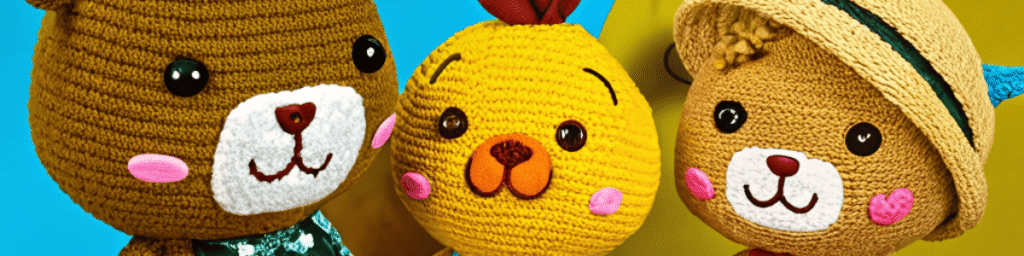
I want to knit so much! The question is — what to knit from? It is very important to choose the right yarn.
Not only the appearance of the finished toy depends on it, but also its durability, tactile sensations and even ease of use. Here are some recommendations and examples.
1. Cotton: Classic for amigurumi
[Cotton] is one of the most popular materials for knitting toys, and there are good reasons for this.
The advantages of cotton:
- [Naturalness and hypoallergenicity]: Cotton is a natural fiber that is great for children’s toys, as it is soft, breathable and rarely causes allergies
- [Good structure and detail]: Cotton yarn has a clear structure that allows you to knit small details well, create expressive patterns and maintain the shape of the toy. This is especially important for amigurumi, where complex shapes and elements are often used
- [Pleasant tactile sensations]: Cotton is pleasant to the touch, it does not slip in your hands, which makes the knitting process more comfortable
- [Wide color palette]: Cotton yarn is presented in a huge variety of colors, which allows you to create bright and varied toys
- [Ease of care]: Cotton toys are usually easy to wash and dry quickly
Disadvantages of cotton:
- [Can be a bit stiff]: Some types of cotton can be a bit stiff, especially if they are not mercerized
- [Can stretch]: If not cared for properly or knitted too tightly, cotton can stretch a bit
- [Price]: High-quality cotton can be more expensive than acrylic
What to look for when choosing cotton yarn:
- [Mercerized cotton]: It is smoother, shinier and stronger, holds its shape better
- [Non-mercerized cotton]: Softer and more matte, but may be less durable
- [Thickness of yarn]: For amigurumi, medium-thick yarn is most often used (for example, 100-120 meters per 50 grams). Thinner yarn is suitable for miniature toys, and thicker yarn is suitable for large ones
2. Acrylic: Affordability and practicality
[Acrylic] is a synthetic fiber that is also very popular among [amigurumi] lovers.
Advantages of acrylic:
- [Affordable price]: Acrylic is one of the most budget-friendly yarn options
- [Ease of care]: Acrylic toys are easy to wash, dry quickly and do not fade
- [Bright colors]: Acrylic is easy to dye, so it is available in a wide range of bright and saturated colors
- [Durability and wear resistance]: Acrylic is quite durable and resistant to abrasion, which makes toys durable
- [Does not stretch]: Acrylic holds its shape well and does not stretch when knitting
Disadvantages of acrylic:
- [Synthetic origin]: Acrylic is not a natural material, so it can cause allergies in some people, especially children with sensitive skin
- [Tactile sensations]: Acrylic can be less pleasant to the touch compared to cotton, sometimes it can be slippery or “squeaky”
- [Does not “breathe”]: Synthetic fibers are worse at allowing air to pass through, which can be less comfortable for toys that will be frequently touched
- [Pilling]: Some acrylics can form pilling over time
What to look for when choosing acrylic yarn:
- [Acrylic Quality]: There are different types of acrylic. Look for yarns labeled as “anti-pilling,” which means they are less likely to pill
- [Softness]: Feel the yarn. Some acrylic yarns are very soft and cuddly, while others are more rigid
- [Yarn Thickness]: As with cotton, choose the thickness based on the size of the toy you want
3. Blended Yarns: The Best of Both Worlds
[Blended yarns] are a combination of natural and synthetic fibers, often offering the benefits of both.
Advantages of Blended Yarns:
- [Combination of Properties]: For example, a cotton-acrylic blend can be softer and more comfortable to the touch than pure acrylic, but also more durable and easier to care for than pure cotton
- [Improved Structure]: The addition of synthetic fibers can improve the structure of the yarn, making it more resilient and less prone to deformation
- [Texture Variety]: There are many blended yarns with different fiber ratios, allowing you to find the perfect one for a specific project
Disadvantages of Blended Yarns:
- [Content Varying]: It is important to carefully examine the composition of the yarn, as the fiber ratio can greatly affect its properties
- [Price]: Can be more expensive than pure acrylic, but is often cheaper than high-quality pure cotton
What to look for when choosing a blended yarn:
- [Composition]: Pay attention to the percentage of fibers. Amigurumi often uses blends with a high cotton content (e.g. 50% cotton/50% acrylic) or with wool added for softness and warmth
- [Purpose]: Some blended yarns are specifically designed for baby items or toys
4. Polyester: Soft and Bulky
[Polyester] is another popular synthetic material that is often used to create super soft and fluffy toys.
Advantages of Polyester:
- [Incredibly Soft]: Polyester yarn, especially plush or “grass” yarn, is very soft and cuddly, making toys very cozy
- [Volume and Fluffiness]: Polyester gives toys volume and a fluffy look
- [Easy to Care]: Polyester toys are easy to wash and dry quickly
- [Durability]: Polyester is quite durable and hard-wearing
- [Hypoallergenic]: For many people, polyester is a hypoallergenic option
Disadvantages of Polyester:
- [Difficult to Work]: Plush or fluffy polyester yarn can be difficult to work with because the stitches are hard to see, making it difficult to count and knit. This requires some experience and patience
- [Doesn’t “breathe”]: Like acrylic, polyester is a synthetic material and doesn’t breathe well
- [Can pill]: Some types of polyester can also pill over time
- [Not always suitable for fine detail]: Because of its fluffiness, polyester isn’t always suitable for making toys with fine, detailed details
- [Doesn’t unravel well]
What to look for when choosing polyester yarn:
- [Type of polyester]: Yarns come in different pile lengths and densities. Short pile yarns are often used for amigurumi and are easier to work with
- [Manufacturer]: The quality of polyester yarn can vary greatly. Look for yarn from reputable manufacturers that are known for their softness and durability
- [Care instructions]: Always follow the manufacturer’s washing and care instructions to keep your toy looking its best
How to choose the right one?
The choice of yarn for [amigurumi] depends on your personal preferences, the desired result and, of course, who the toy is intended for. Here are some recommendations:
- [For children’s toys]: If you are knitting a toy for a child, especially a toddler, choose natural or hypoallergenic materials. Cotton is a great choice due to its softness, safety and good structure. Blended yarn with a high cotton content will also work. If you choose polyester, make sure it is very soft and does not have small parts that a child can tear off
- [For toys that will be used and washed often]: Acrylic and polyester are good options due to their durability and ease of care. They are also more resistant to fading
- [For toys where detail and clarity of pattern are important]: Cotton is your best friend. It allows you to knit small details, create expressive faces and maintain the shape of the toy
- [For soft and fluffy toys]: Polyester is an ideal choice. It will give the toy a cozy and pleasant to the touch look
- [For experimentation and compromise]: Blended yarn offers a wide range of possibilities. Try different combinations to find what you like best
A few additional tips:
- [Try the yarn]: If possible, hold the yarn in your hands before buying. This will help you evaluate its softness, smoothness, and how it lies in your hand
- [Pay attention to the yardage]: The yardage of the yarn (the number of meters in 50 or 100 grams) is important for calculating the amount of yarn you will need and for choosing the appropriate hook size
- [Read the label]: The yarn label usually contains the composition, care instructions, and the recommended hook or knitting needle size
- [Don’t be afraid to experiment]: The best way to understand which yarn is right for you is to try different options. Start with small projects to evaluate how the yarn behaves in work and what the finished toy looks like
Result: If you don’t try, you won’t know! Only the number of attempts will help determine your preferences in choosing a material. Even stitches to you!
Popular Products
-
 Товар99,00 ₴
 -
 Mug BHeart5,00 ₴
 -
 Phone Case Canvas9,95 ₴